
Quick fitment answer: G-Class forged wheels work best when the wheel has proper brake clearance, SUV load rating, and enough tire sidewall for hot Middle East roads.
The Mercedes-Benz G-Class has a strong shape that can carry an aggressive wheel, but it is also heavy, powerful, and expensive to get wrong. A clean forged setup should look premium without ruining ride comfort or creating rubbing issues. In the Middle East, heat, highway speed, and city driving all matter.
Many G-Class owners want a 22 inch forged concave wheel for street presence. That can work beautifully, but the tire choice and offset need to be sensible. A 20 inch setup may be better for rough roads or mixed use, while 22 inch wheels are best for a luxury street build.
Why This Setup Works
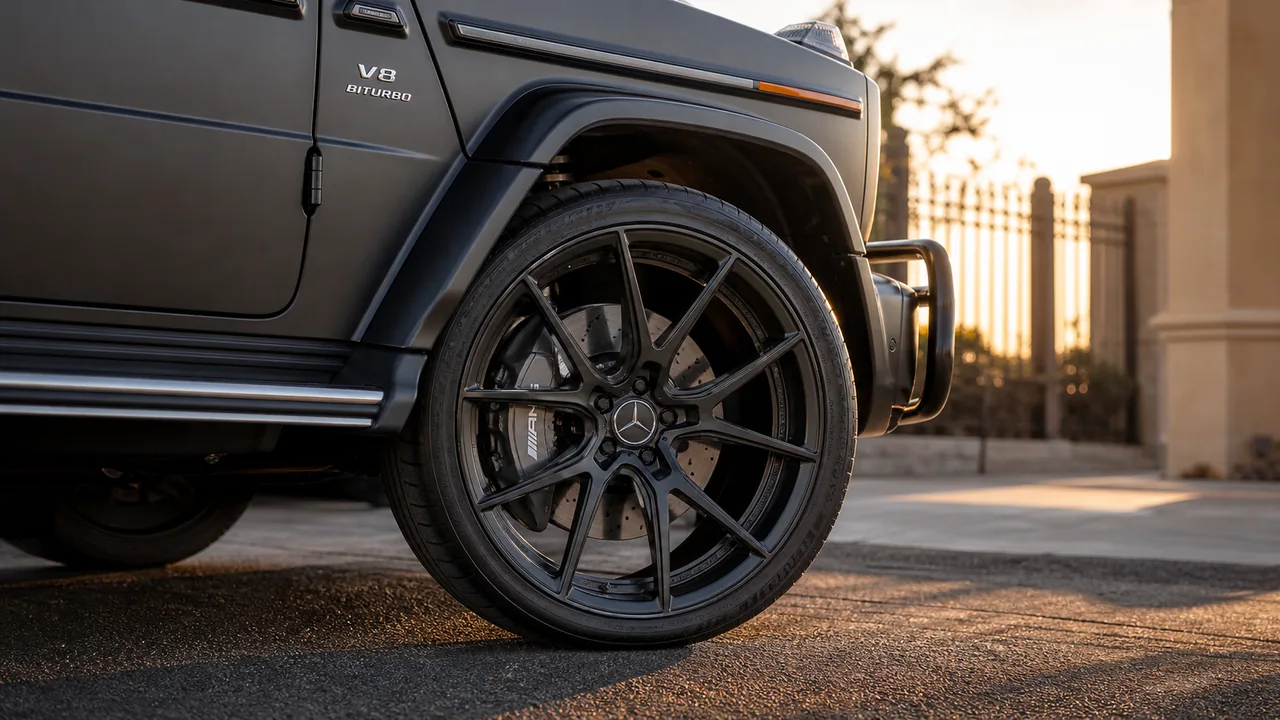
The G-Class has enough visual weight for a concave forged wheel. A well-designed forged wheel can show brake hardware, reduce weight compared with many large cast wheels, and still support the SUV properly.
The trick is avoiding the oversized show-car look. The tire should still have enough sidewall to protect the wheel and keep the vehicle comfortable in heat and city traffic.
Best Wheel Size
20 Inch Setup
A 20 inch wheel is the practical choice for owners who want comfort, tire protection, and occasional rough-road use. It keeps more sidewall and usually rides better.
22 Inch Setup
A 22 inch forged wheel gives the G-Class a premium street stance. It suits city and highway use, but it needs a good tire and correct offset to avoid looking overdone.
Offset and PCD Guide
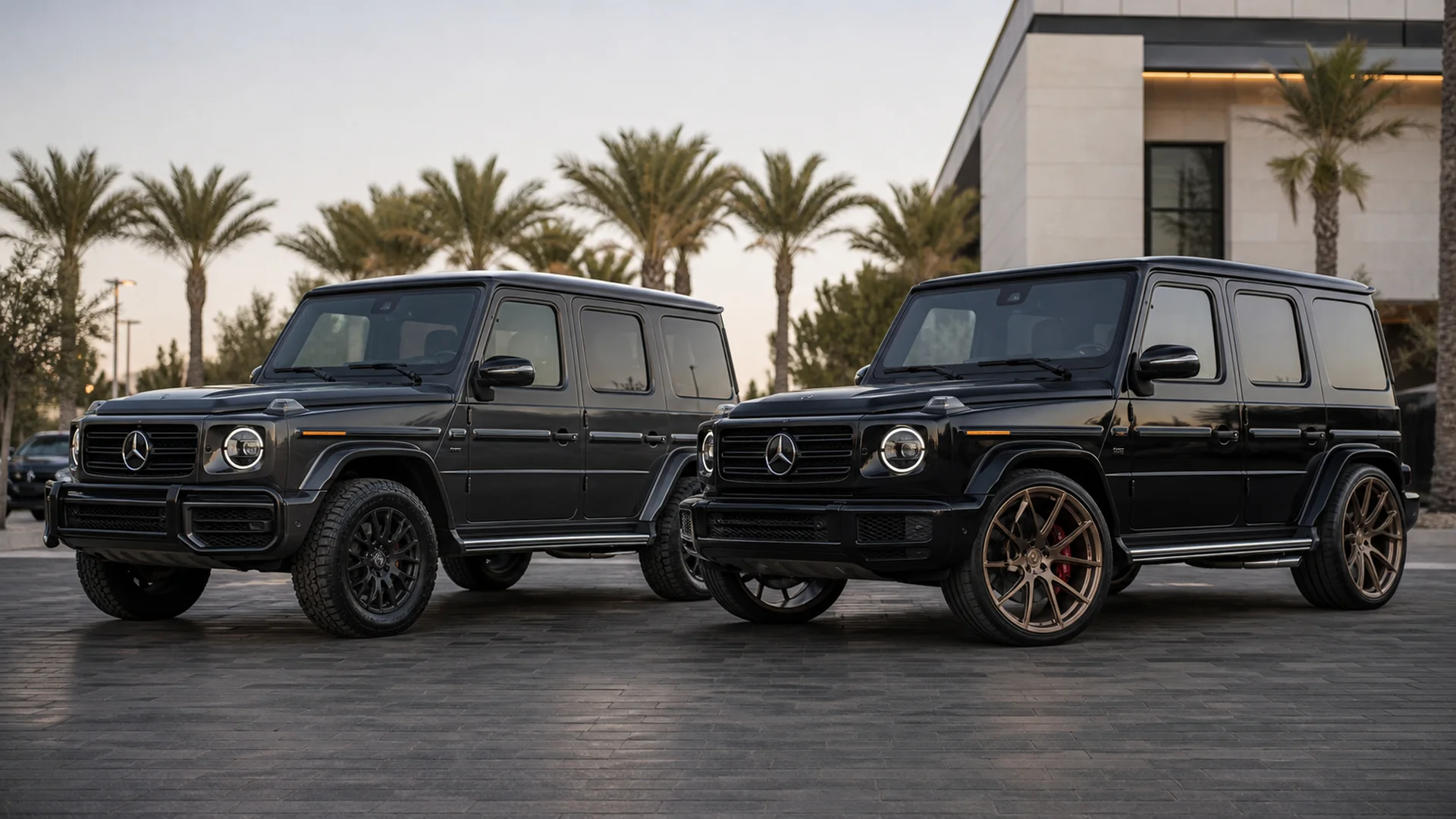
Modern G-Class fitment commonly uses a 5×130 bolt pattern, but exact model year and trim must be confirmed. AMG brakes and aftermarket brake kits make spoke clearance especially important.
For street fitment, the wheel should sit close to flush without excessive poke. A G-Class looks more refined when the stance is strong but controlled.
Recommended Tire Setup
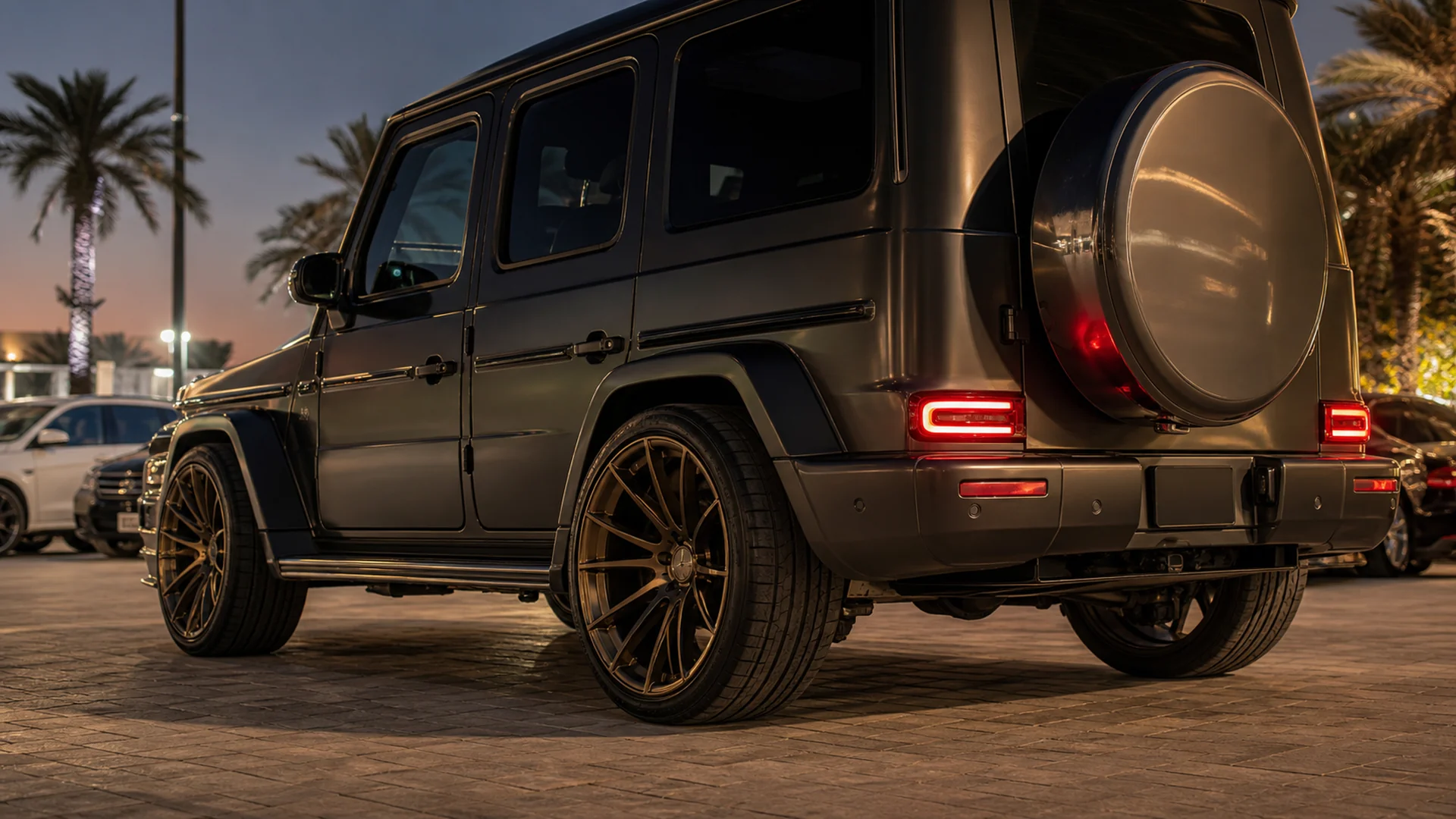
Tire choice depends on whether the vehicle is a street build or a mixed-use SUV. Performance SUV tires are quieter and sharper on road. All-terrain tires make sense if the G-Class sees desert tracks or rougher surfaces.
- Comfort-focused 20 inch setup: SUV tire with taller sidewall
- Premium 22 inch setup: performance SUV tire with realistic sidewall
- Mixed use: all-terrain tire in a conservative size
- Avoid: stretched tires on a heavy SUV
Real-World Use Cases
A G-Class in the Middle East may spend most of its life on city roads and highways, but it still needs wheel strength and tire quality. Heat, high speeds, heavy braking, and rough pavement all put stress on a large wheel package.
For luxury street builds, the best wheel setup should look intentional rather than oversized. A forged concave wheel can give depth and presence while keeping the vehicle refined.
For owners who occasionally drive desert tracks or rough access roads, a 20 inch package may be more sensible than a 22 inch package. It gives the tire more room to absorb impacts and improves comfort.
Fitment Details That Matter
G-Class buyers often care about visual detail, so wheel design matters. A concave spoke profile can look strong, but it must still clear the brake caliper. A deep spoke design that only works with spacers is not the same as a wheel engineered for the vehicle.
Ride quality should stay part of the conversation. A G-Class is already upright and heavy, and a harsh wheel and tire package can make the vehicle feel less premium.
For dealers, G-Class wheel pages should include brake clearance information, load rating, finish details, tire size suggestions, and real installed photos.
Real Fitment Notes
For a G-Class, tire brand and load index should never be treated as an afterthought. The vehicle is heavy, often driven fast, and commonly used in hot climates.
Owners who want a more aggressive stance should make small changes first. A slightly wider forged wheel with the correct offset usually looks more expensive than an extreme setup with too much poke.
Common Fitment Mistakes
Avoid stretched tires on a heavy SUV. The G-Class needs proper tire support, especially in hot conditions where tire performance and load capacity matter.
Avoid buying a wheel without a brake template. AMG brakes and big aftermarket calipers can create clearance problems even when diameter and bolt pattern look correct.
Also avoid very cheap large wheels. A heavy SUV on oversized wheels needs engineering, not just styling.
Buying Checklist and Final Recommendation
When buying, confirm 5×130 PCD for the specific model, hub fitment, lug hardware, brake clearance, load rating, tire load index, and speed rating. These details matter more on a G-Class than on a light crossover.
A brushed dark finish looks premium, satin black is aggressive, and gunmetal is easy to maintain. Polished lips can look beautiful but need more cleaning in dusty conditions.
Final recommendation: choose forged G-Class wheels that clear the brakes, carry the vehicle properly, and preserve enough tire to keep the SUV comfortable in Middle East heat.
For a G-Class, tire brand and load index should never be treated as an afterthought. The vehicle is heavy, often driven fast, and commonly used in hot climates. A premium tire with the right rating will protect the wheel, improve braking confidence, and keep the SUV feeling stable.
Owners who want a more aggressive stance should make small changes first. A slightly wider forged wheel with the correct offset usually looks more expensive than an extreme setup with too much poke. The G-Class has presence already; the wheel should sharpen that presence, not overpower it.
The best G-Class wheel upgrade feels like it belongs on the vehicle. It should photograph well, clear the brakes, carry the weight, and still feel calm on the highway. When those basics are right, the finished build looks expensive because it is properly resolved.
That balance is what separates a premium G-Class fitment from a generic oversized wheel install. A good setup keeps the vehicle luxurious while giving it a more personal and performance-focused stance.
For Middle East buyers, comfort and heat management should stay in the decision. A tire that works well in high temperatures and a wheel that clears the brakes properly will matter more after months of driving than a few extra millimeters of aggressive poke. The premium choice is the one that keeps the vehicle composed.
This is especially important on a vehicle as heavy and visually iconic as the G-Class.
FAQ
What is the best wheel size for a Mercedes G-Class?
A 20 inch wheel is most practical, while a 22 inch forged wheel is popular for premium street builds.
Are forged wheels worth it for a G-Class?
Yes, forged wheels can be worth it because the G-Class is heavy and benefits from strong, lighter wheel construction.
What bolt pattern does the G-Class use?
Many modern G-Class models use a 5×130 bolt pattern, but exact fitment should be confirmed by model year.
Can a G-Class run 22 inch wheels?
Yes, 22 inch wheels are common on street-focused G-Class builds when offset, tire load rating, and brake clearance are correct.
What tire is best for Middle East G-Class use?
For mostly city and highway driving, a quality performance SUV tire is best. For desert tracks, a conservative all-terrain setup is more practical.