
Best 20×10 vs 20×12 Wheels for a Strong Widebody Setup
20×10 vs 20×12 wheels is a topic where the right answer depends on the car, not just the wheel size. A setup that looks perfect on a widebody coupe can feel heavy on a daily sedan, and an SUV that looks great on 22s still needs enough tire sidewall for real roads.
This guide uses Dodge Challenger Widebody as the main example, but the fitment logic applies to similar builds where owners care about stance, handling, tire choice, and long-term usability.
Quick answer: Start with 20×10 front or square setups, and 20×12 rear fitment on widebody cars, keep offset in the range of fitment-specific offsets that keep the wheel flush without hitting the flare or suspension, and choose tires such as 275/40R20, 305/35R20, 315/35R20, and other wide performance tire setups based on real use.
Why This Wheel Setup Works
A good wheel setup starts with proportion. The wheel should fill the arch, clear the brakes, keep the tire supported, and avoid the strange poke that happens when offset is chosen only for photos.
The best fitment also respects how the vehicle is driven. Performance cars need steering response and tire support. Luxury SUVs need ride quality and brake clearance. Touring 4x4s need load rating and sidewall. That is why the same wheel diameter can be right on one vehicle and wrong on another.
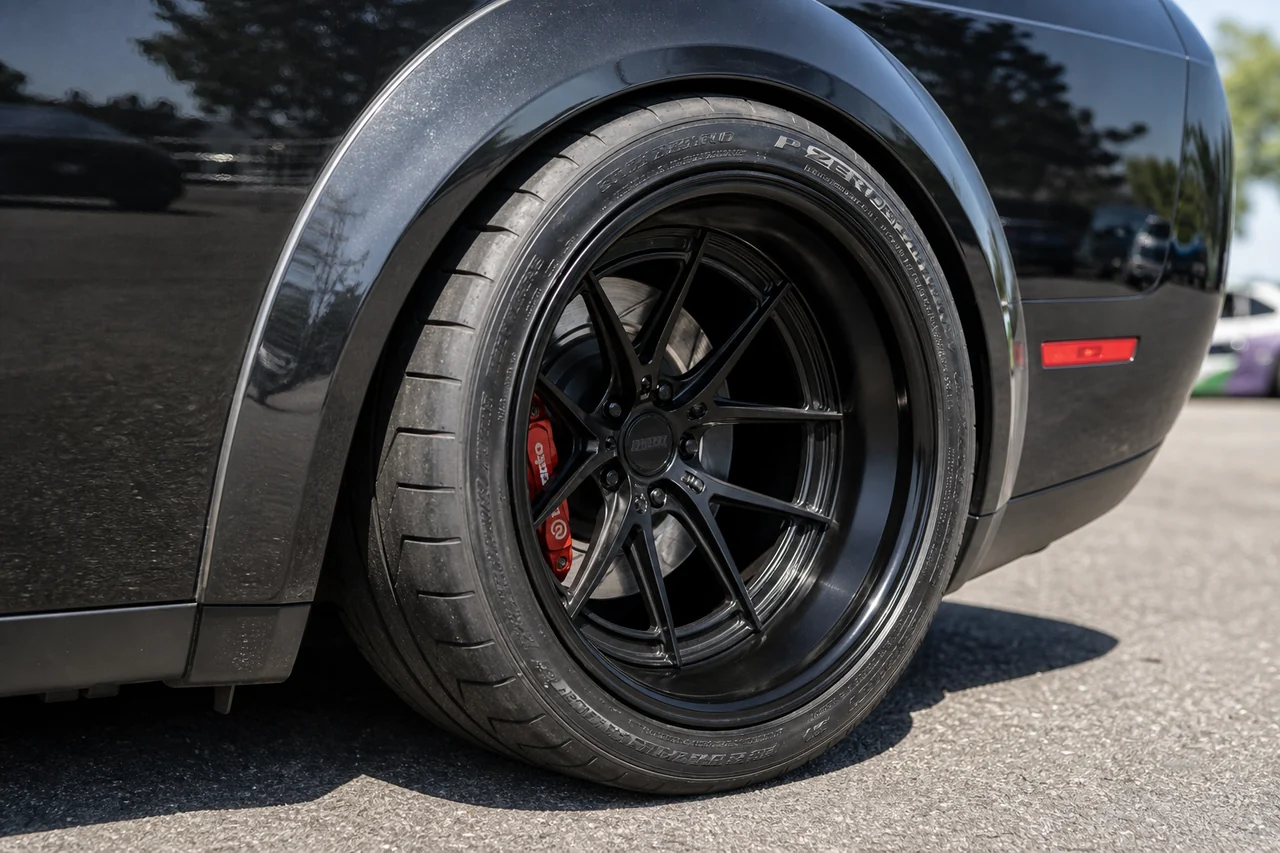
Best Wheel Size for Dodge Challenger Widebody
20×10 front or square setups, and 20×12 rear fitment on widebody cars is the most useful range for this build. The smaller end gives more comfort and tire compliance, while the larger end makes the stance sharper and often opens up more forged wheel designs.
18 Inch Setup
An 18 inch setup works well when sidewall, ride comfort, and tire availability matter. It is usually the more practical choice for track days, rough roads, touring, and cars that see serious mileage.
20 Inch Setup
A 20 inch setup gives a stronger visual stance and can still drive well if the tire sidewall is not too short. The main risk is adding weight or choosing a tire that makes the ride harsh.
22 Inch Setup
A 22 inch setup belongs mostly on larger SUVs. It can look premium when the wheel is forged and the tire is correctly rated, but it is rarely the right answer for smaller performance cars or rough-road use.

Offset and Fitment Guide
For this type of build, use fitment-specific offsets that keep the wheel flush without hitting the flare or suspension. More aggressive offset can improve stance, but it can also create rubbing, tramlining, extra road spray, and more load on suspension parts.
5×115 on many Challenger applications, with hub and brake checks required. Always check brake clearance before ordering, especially on performance cars and luxury SUVs with large calipers.
Recommended Tire Sizes
Recommended tire directions include 275/40R20, 305/35R20, 315/35R20, and other wide performance tire setups. Tire shape matters as much as the number on the sidewall, because a square-shouldered tire can rub where a rounded tire clears.
For daily use, avoid choosing the widest tire only because it fits on paper. The best tire supports the wheel properly, clears at full lock and compression, and keeps the vehicle enjoyable on normal roads.

Forged vs Cast Options
Forged wheels make the most sense when weight, strength, brake clearance, and custom sizing matter. Cast wheels can still be suitable when the vehicle is mild and the brand provides clear load ratings. Flow formed wheels sit between the two and are often a smart value option.
Best Finish and Colors
Black forged wheels suit white, grey, silver, and dark cars because they keep the look clean and technical. Bronze adds contrast and works well on white, green, black, and grey builds. Brushed or machined finishes look premium but need more careful cleaning.
Pros and Cons
- Pros: better stance, stronger fitment, more tire choice, and a more personal build.
- Cons: higher tire cost, possible rubbing, more cleaning, and the risk of worse ride quality if the setup is too large or too heavy.
Things to Avoid
Avoid copying a fitment without checking suspension height, brake package, tire model, and local rules. The same wheel spec can behave differently across trims and markets.
Avoid unclear load ratings and ultra-cheap wheels on heavy vehicles or performance cars. A wheel should be chosen like a functional part, not just a cosmetic accessory.
Buying Advice
Before ordering, confirm PCD, center bore, brake clearance, load rating, wheel width, offset, tire diameter, and whether the setup needs spacers, trimming, or alignment changes. A good supplier should be able to explain why a setup works, not just say it fits.
Final Recommendation
For 20×10 vs 20×12 wheels, choose the setup that matches the vehicle and the driving style. The cleanest result is usually the wheel that looks strong, clears properly, and still makes the car or SUV better to use.
Real-World Fitment Notes
The jump from 20×10 to 20×12 is bigger than many buyers expect. A 20×12 wheel changes the outer position, tire shape, and steering feel, especially on cars that are not truly widebody. The look can be excellent, but the fitment needs enough flare width and tire support to avoid looking forced.
For a street car, a 20×10 square or staggered setup is often easier to live with. The 20×12 direction makes sense when the body, suspension, and tire width are built around it. If the car has to drive in rain, traffic, and rough city streets, tire availability and hydroplaning resistance matter too.
Buying Checklist
Check inner barrel clearance, outer flare coverage, tire manufacturer rim width range, brake caliper room, and whether the alignment can keep the tire from rubbing under compression. Deep concave wheels look best when the tire is properly supported rather than stretched beyond its useful range.
Final Fitment Check
Before the wheels are mounted permanently, test the setup at full steering lock, over a driveway angle, and with normal passenger or cargo weight. This final check catches the small clearance issues that static measurements can miss, especially around liners, brake calipers, suspension arms, and tire shoulders.
FAQ
What wheel size works best for Dodge Challenger Widebody?
The most useful range is 20×10 front or square setups, and 20×12 rear fitment on widebody cars. Smaller wheels usually give more tire sidewall and comfort, while larger forged wheels can sharpen the look when the tire size is still sensible.
What offset should I choose?
Use fitment-specific offsets that keep the wheel flush without hitting the flare or suspension. Offset should be chosen with wheel width, tire model, brake clearance, and suspension height, not from the number alone.
What PCD should I check?
5×115 on many Challenger applications, with hub and brake checks required. PCD is only the first check; hub bore, brake clearance, load rating, and hardware also matter.
What tire setup is recommended?
Common choices include 275/40R20, 305/35R20, 315/35R20, and other wide performance tire setups. Choose tire load rating and sidewall around the way the vehicle is actually used.