
Best Jeep Wrangler Wheels for a Strong Off Road Setup
Jeep Wrangler wheels fitment note: the best setup balances wheel size, offset, tire sidewall, load rating, and the way the truck is actually used.
Jeep Wrangler JL wheel fitment is not just about choosing the biggest wheel that fits in the arch. The right setup has to look balanced, clear the suspension, carry the vehicle weight, and still match how the truck is actually driven.
This guide keeps the advice practical for owners comparing aftermarket wheels, tire sizing, offset, PCD, and real-world use. It is written for trail driving, overlanding, rock tracks, beach use, and daily 4×4 driving, not for a catalog page that ignores rubbing, sidewall, or load rating.
Quick answer: For a reliable Jeep Wrangler JL setup, start with 17×8.5, 17×9, or 18×9, keep offset in the range of about 0 to -12 for many trail builds, depending on tire width and flare coverage, and choose tires such as 285/70R17, 315/70R17, 35×12.50R17, or similar trail-focused sizes after checking clearance on the exact model.
Why This Wheel Setup Works
The strongest setups keep wheel width, offset, and tire sidewall working together. A wider wheel can make the truck look planted, but the tire shoulder also moves closer to liners, mud flaps, bumper tabs, and sometimes upper control arms.
A clean fitment should make the truck look more purposeful without making it worse to drive. That means no random poke, no vague load rating, and no tire size chosen only because it looked good on another build.
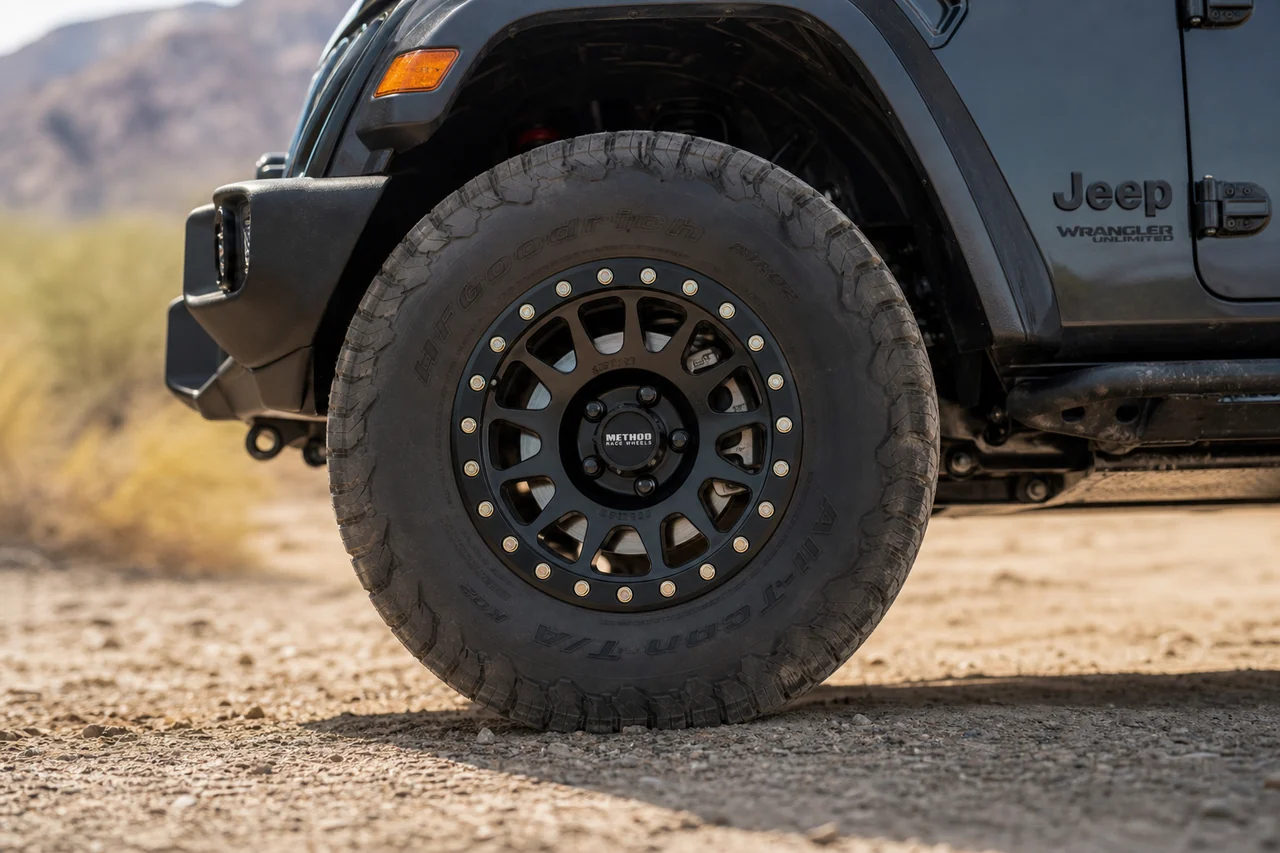
Best Wheel Size for Jeep Wrangler JL
17×8.5, 17×9, or 18×9 is the most realistic wheel size range for this platform. An 18 inch wheel generally keeps more sidewall and comfort, while a 20 inch wheel gives a stronger visual stance for daily and street-focused trucks.
18 Inch Setup
An 18 inch setup is the safe choice for rough roads, touring, sand, and loaded trips. It usually gives better impact protection and a more compliant ride.
20 Inch Setup
A 20 inch setup can still be practical when the tire has enough sidewall and the wheel is correctly load rated. It suits owners who want a sharper stance without going into low-profile street tire territory.
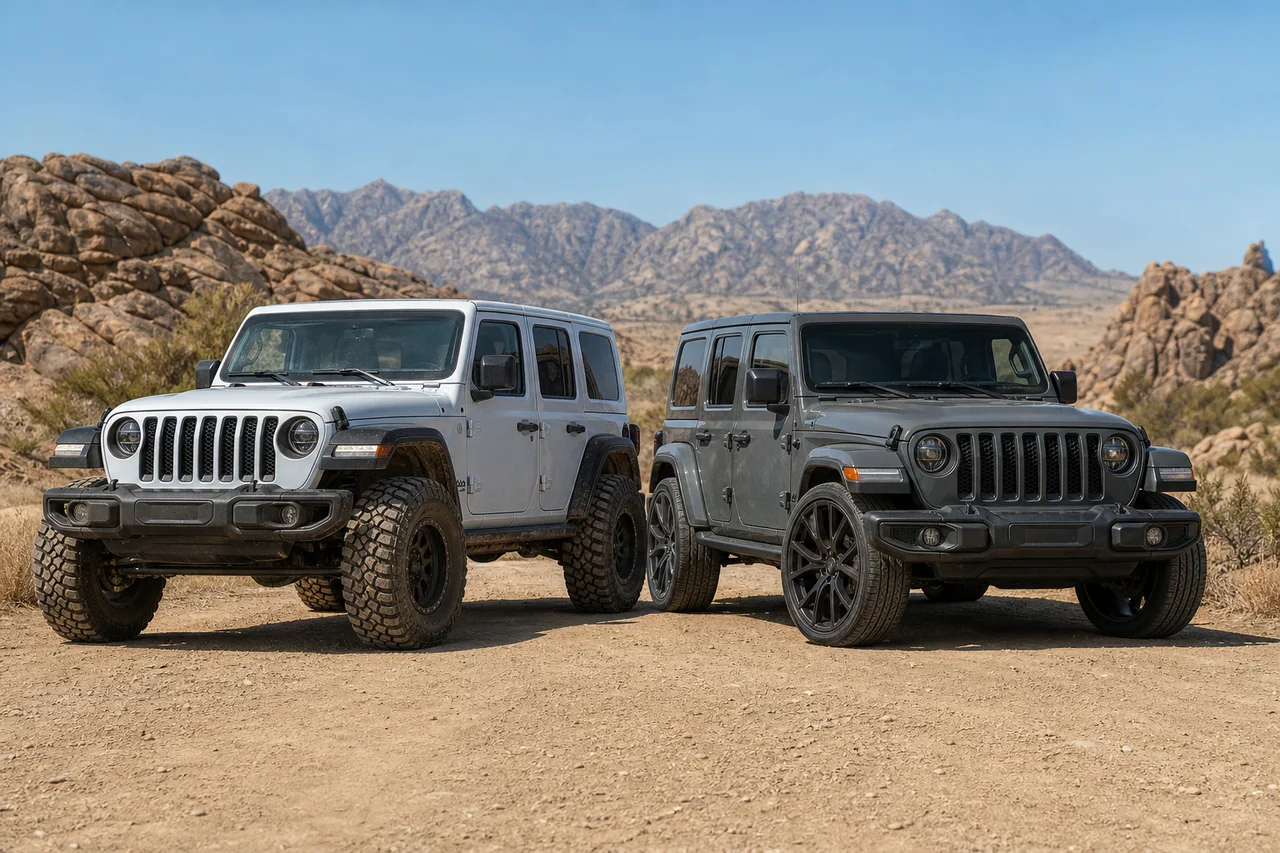
Offset and Fitment Guide
For this platform, a useful offset direction is about 0 to -12 for many trail builds, depending on tire width and flare coverage. More negative offset pushes the wheel outward and can improve stance, but it also increases rubbing risk and road spray.
PCD matters before anything is ordered: 5×127 on many JK and JL models, with generation confirmation required. Also check hub bore, nut seat, brake caliper clearance, wheel load rating, and whether the tire remains covered by the guard.
Recommended Tire Sizes for Jeep Wrangler wheels
Recommended tire directions include 285/70R17, 315/70R17, 35×12.50R17, or similar trail-focused sizes. A rounded all-terrain tire can clear where a square-shouldered mud terrain rubs, even if both tires show a similar size on paper.
If the truck carries weight or tows, tire load index should come before tread pattern. A good wheel and tire package should feel stable at highway speed and still have enough sidewall for the roads it sees.
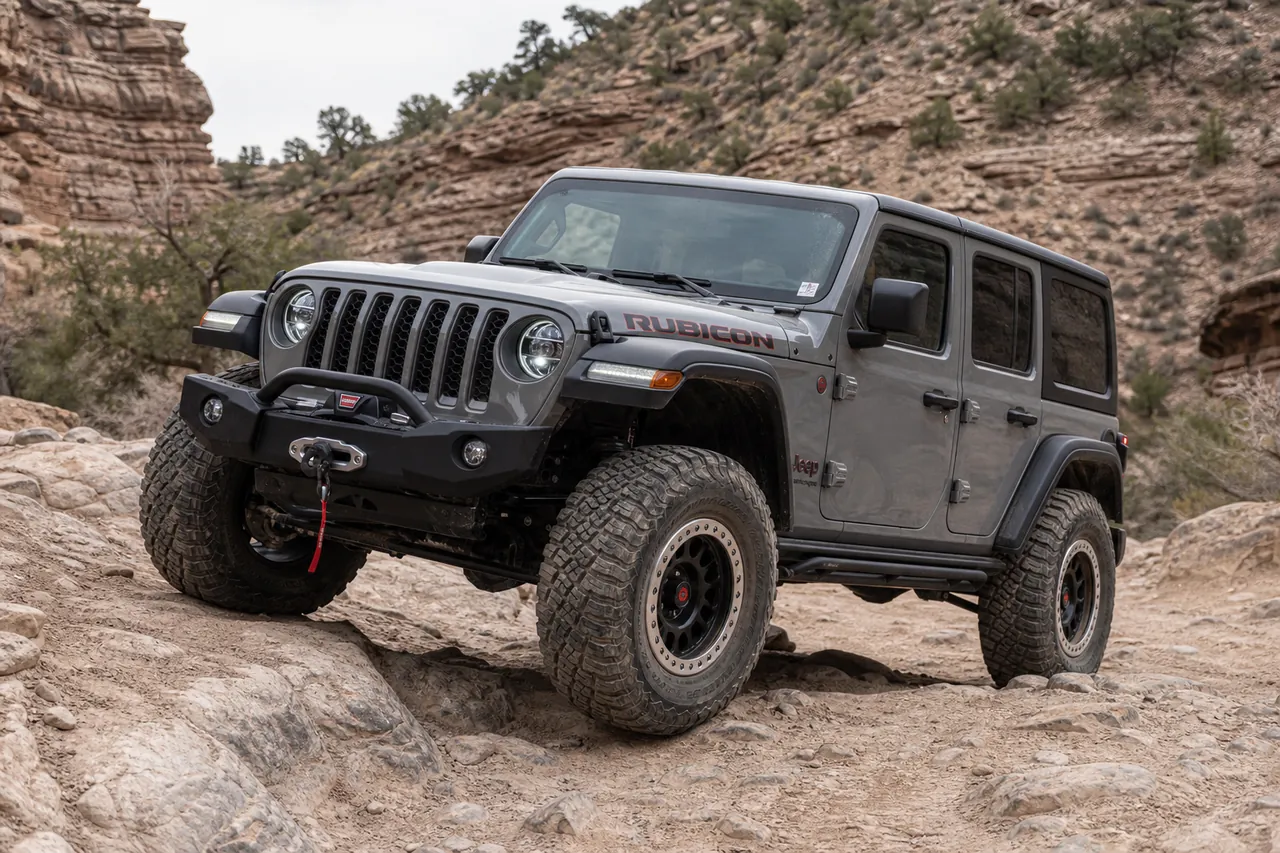
Forged vs Cast Options
Forged wheels are attractive for trucks because they can reduce weight while improving strength, especially in larger sizes. Cast wheels can still be suitable when they come from a reputable brand with clear testing and load ratings. Flow formed wheels sit in the middle and are often a strong value for daily trucks.
Best Finish and Colors
Matte black is the easiest finish to maintain and works on almost every body color. Bronze gives white, grey, black, and green trucks a more overland feel. Machined or polished details look premium, but they need more careful cleaning after salt, sand, and brake dust.
Pros and Cons
- Pros: stronger stance, better tire options, more personal style, and improved fitment when the wheel is chosen correctly.
- Cons: possible rubbing, higher tire cost, more weight if the package is poorly chosen, and extra cleaning with aggressive offsets.
Things to Avoid
Avoid buying wheels only from a photo. Suspension height, tire brand, alignment, flare width, and regional regulations can change the result completely.
Avoid unclear load ratings, unknown PCD claims, and extreme offsets on a truck that needs to remain comfortable for daily use.
Buying Advice
Before buying, confirm PCD, center bore, brake clearance, load rating, offset, tire diameter, and the intended use. If the truck is lifted, also check caster, upper control arm clearance, and whether trimming is acceptable.
Final Recommendation
For most owners, the best Jeep Wrangler wheels setup is the one that looks strong, drives cleanly, and fits the real use case. Start with 17×8.5, 17×9, or 18×9, keep the offset sensible, and choose a tire that gives enough sidewall for trail driving, overlanding, rock tracks, beach use, and daily 4×4 driving.
Real-World Setup Notes
One detail that often gets missed is how the same wheel size behaves differently once accessories are added. A bar, winch, canopy, drawers, long-range tank, or towing load can lower the vehicle enough to change tire clearance. That is why a setup that clears on an empty truck may start touching the liner or mud flap once the vehicle is loaded for a trip.
For Jeep Wrangler JL, the safer approach is to choose the wheel and tire package around the heaviest normal use, not the cleanest unloaded photo. If the truck regularly carries gear, keep the offset moderate and leave more sidewall. If it is mostly a street build, a sharper 20 inch stance can make sense as long as the tire is still load rated.
Daily Driving and Handling
Wheel weight, tire width, and offset all change how the steering feels. Wider wheels and more negative offset can make the truck feel broader and more planted, but they can also add tramlining, steering kickback, and extra effort at low speed. A heavy tire can also affect braking and fuel economy more than many owners expect.
The best daily setup is usually the one that looks strong without creating constant compromises. That means enough poke to fill the guards, enough clearance for full steering lock, and enough tire sidewall to keep the ride from becoming brittle on rough pavement.
Load Rating and Dealer Advice
Before a dealer or shop recommends a wheel, they should confirm the vehicle weight, axle load, intended tire, and whether the truck tows or travels loaded. A wheel that fits the hub is not automatically the right wheel for the job. Load rating, brake clearance, nut seat, and center bore all need to line up with the vehicle.
For buyers ordering online, the safest move is to send the vehicle year, trim, suspension details, tire size target, and current rubbing concerns before purchasing. Good fitment advice should prevent returns, not just sell the most aggressive offset available.
FAQ
What wheel size works best for a Jeep Wrangler JL?
For most Jeep Wrangler JL builds, 17×8.5, 17×9, or 18×9 is the most useful range. Smaller wheels leave more tire sidewall for off-road use, while 20 inch setups usually give a cleaner street stance.
What offset should I choose?
A sensible starting point is about 0 to -12 for many trail builds, depending on tire width and flare coverage. Exact fitment depends on tire model, suspension height, brake clearance, and how much guard coverage is required in your market.
What PCD does it use?
5×127 on many JK and JL models, with generation confirmation required. Always confirm the exact year and trim before ordering wheels because bolt pattern is only one part of fitment.
What tire setup is recommended?
Common tire directions include 285/70R17, 315/70R17, 35×12.50R17, or similar trail-focused sizes. The best choice depends on lift height, load rating, rubbing tolerance, and whether the truck is mainly used on-road or off-road.