
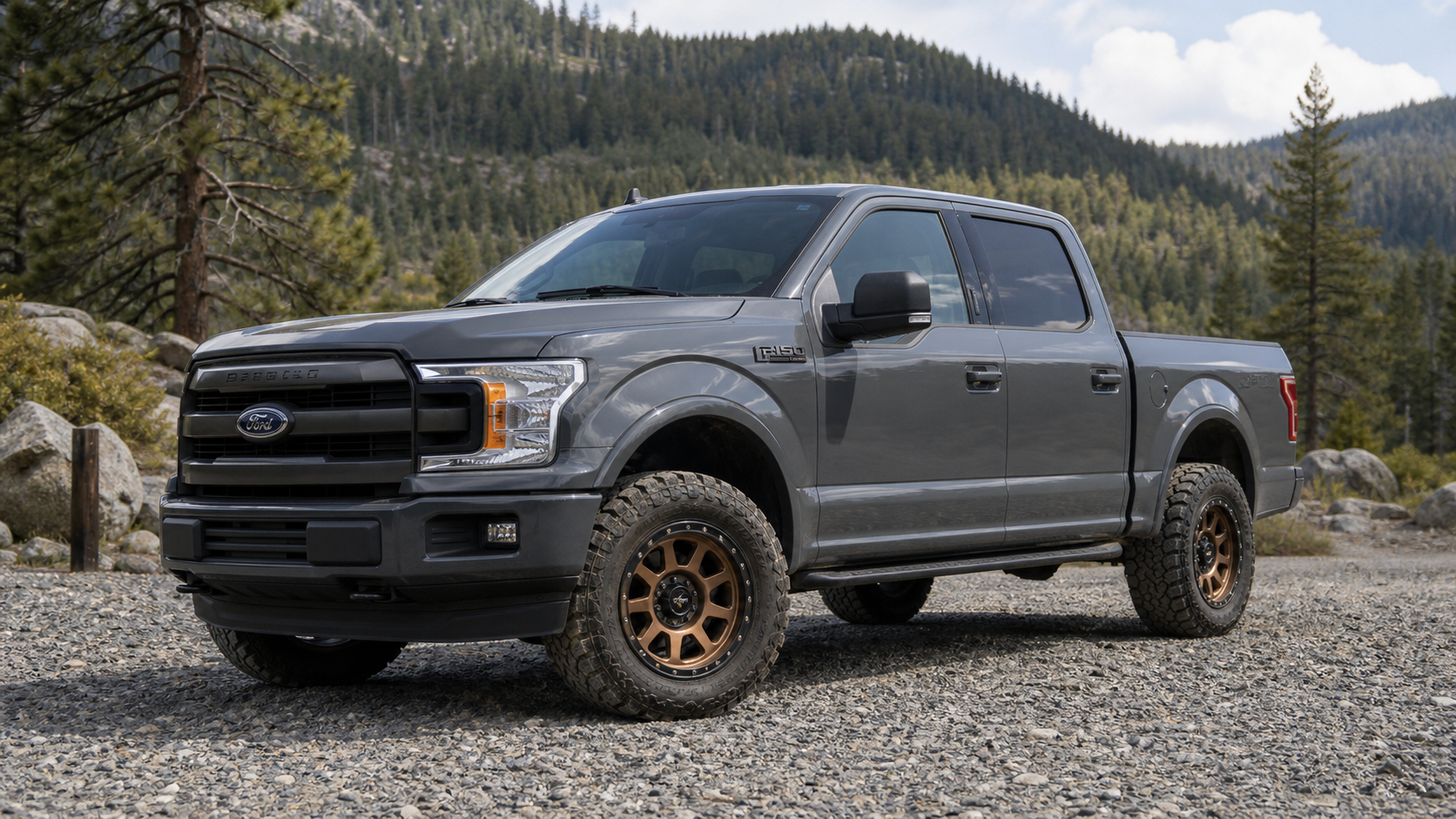
Quick fitment answer: Ford F-150 off-road wheels usually work best in 17 or 18 inch sizes with enough sidewall for trails, towing, and daily driving.
The Ford F-150 is one of the easiest trucks to modify, but that does not mean every wheel setup works well in the real world. A wheel that looks aggressive in a social media photo can rub on the crash bars, feel heavy on the highway, or push the tire too far outside the fender for daily driving. The right setup depends on how the truck is used: weekend trails, desert roads, snow, towing, job-site driving, or a clean street stance with all-terrain tires.
For most USA F-150 owners, the sweet spot is a strong 17 or 18 inch wheel with enough offset to clear wider tires without making the truck feel sloppy. A 20 inch setup can also work, especially on newer trucks with larger brakes or owners who want a sharper street look, but it usually gives up some sidewall comfort off-road. This guide focuses on practical fitment choices for common F-150 generations, including the 2015-2020, 2021-2023, and newer trucks. Always confirm brake clearance, hub bore, suspension height, and trim-specific details before ordering, especially on Tremor, Raptor, PowerBoost, and trucks with upgraded brakes.
Why This Wheel Setup Works
The F-150 responds well to a wheel and tire package that keeps the tire sidewall useful. Off-road traction comes from the tire, not only the wheel. A smaller-diameter wheel leaves more sidewall, which helps the tire flex over rocks, gravel, sand, ruts, and washboard roads. That is why 17 and 18 inch wheels are so popular on F-150 4×4 builds.
A good off-road wheel setup also avoids excessive poke. A little extra track width can look good and improve clearance near the upper control arm, but too much negative offset throws mud down the side of the truck, increases scrub radius, and can make steering feel heavier. On a daily-driven truck, a balanced fitment usually beats the most extreme stance.
Best Wheel Size
The best wheel size for a Ford F-150 depends on trim, brake package, lift height, and tire target. The most useful range is 17×8.5, 17×9, 18×9, and 20×9. Wider wheels can work, but they are often better for show builds or large tires on lifted trucks.
17 Inch Setup
A 17 inch wheel is the most trail-friendly choice. It gives the tire more sidewall, which improves ride comfort and allows lower air pressure off-road. Common fitments include 17×8.5 or 17×9 with offsets around +0 to +20, depending on tire width and suspension.
For many F-150 4×4 builds, a 17×9 +12 wheel with a 285/70R17 or 295/70R17 tire is a strong all-around option. With a leveling kit, some trucks can run 35×12.50R17, but trimming or crash bar modification may be required depending on generation, offset, and tire brand.
18 Inch Setup
An 18 inch wheel is the middle ground. It still keeps a useful sidewall, but the truck looks slightly more modern and filled out. A common setup is 18×9 with +12, +18, or +20 offset. This works well with 275/70R18, 285/70R18, or 295/70R18 tires.
If the truck is a daily driver that sees camping roads, snow, and occasional trails, 18 inch wheels may be the easiest choice. They clear many brake packages, give good tire options, and do not feel as heavy as oversized 20 inch packages.
20 Inch Setup
A 20 inch wheel is popular for street-focused F-150 builds and lifted trucks. A 20×9 +18 or 20×10 -18 wheel can look aggressive, but the two setups drive very differently. For a clean daily setup, 20×9 with a mild positive offset is usually easier to live with. For a wider stance, a 20×10 negative offset setup will need more clearance planning.
Recommended tire sizes include 275/60R20, 285/60R20, and 295/60R20. A 35×12.50R20 can work on lifted trucks, but it is not a simple bolt-on for every F-150.
Offset and Fitment Guide
Offset controls how far the wheel sits inward or outward. On the F-150, a moderate positive offset usually creates the best balance. Factory wheels often sit more tucked, while aftermarket off-road wheels move the tire outward for clearance and stance.
For stock suspension, offsets around +18 to +35 are safer. For leveled trucks, +0 to +20 is common. For lifted trucks or aggressive stance builds, negative offsets such as -12 or -18 are possible, but rubbing, fender poke, and steering feel should be expected.
Do not choose offset by looks alone. A 12.5 inch wide tire on a negative offset wheel can contact the fender liner, bumper bracket, or crash bar when turning. Tire shape also matters: some all-terrain tires run square and wide, while others have a rounder shoulder.
PCD and Hub Fitment
Most modern Ford F-150 trucks use a 6×135 bolt pattern. Older model years and some related platforms may differ, so confirm the exact year before buying. Hub bore and lug seat type also matter. A wheel can share the right PCD but still need hub-centric rings or different lug nuts.
For trucks that tow or carry gear, load rating is not optional. Choose wheels with a proper load rating for truck use, especially if the build includes camping gear, bed racks, rooftop tents, or heavy towing.
Recommended Tire Sizes
For a practical F-150 off-road setup, these tire sizes are common:
- Stock or mild daily setup: 275/65R18, 275/60R20
- Leveled truck: 285/70R17, 285/70R18, 295/70R17
- Aggressive leveled build: 35×11.50R17, 35×12.50R17
- Lifted truck: 35×12.50R18, 35×12.50R20, 37 inch setups on properly built trucks
If road noise and fuel economy matter, choose an all-terrain tire. If the truck spends time in mud, clay, or deep ruts, a mud-terrain tire may be worth it, but the trade-off is more noise, weight, and wear.
Forged vs Cast Options
Cast alloy wheels are usually more affordable and can be perfectly fine for light off-road use. The downside is weight and strength consistency. Forged wheels cost more, but they can be lighter and stronger when engineered correctly. On a truck with larger tires, reducing rotating weight can help steering response, braking feel, and ride quality.
For serious off-road use, forged wheels make sense if the budget allows. For a weekend truck that mostly drives on pavement, a high-quality cast or flow-formed wheel can still be a good choice.
Best Finish and Colors
Bronze wheels work especially well on white, black, grey, and Area 51-style truck colors. Satin black is the safe choice for almost any F-150, especially if the truck has black trim. Gunmetal is a clean option when you want contrast without looking too flashy. Machined accents can look good, but they require more cleaning after winter salt, mud, and brake dust.
For a USA truck that sees all seasons, avoid finishes that are difficult to maintain. A satin or matte finish hides trail dust better than gloss black, but gloss finishes can be easier to wash.
Things to Avoid
Avoid buying wheels only because the offset looks aggressive. Too much poke can make the truck less comfortable and create rubbing that gets worse with tire flex. Avoid very heavy wheels if the truck already has oversized tires. The build may look strong but feel lazy in traffic.
Also avoid ignoring spare tire fitment. If you move to 35 inch tires, the factory spare may no longer match the rolling diameter. That matters on long trips and off-road trails.
Final Recommendation
For most Ford F-150 owners in the USA, the best off-road wheel setup is 17×9 or 18×9 with a moderate offset between +0 and +20, paired with a quality all-terrain tire. A leveled truck on 285/70R17 or 285/70R18 tires is easy to live with and still looks purposeful. If the truck is lifted and used off-road, 35 inch tires can work well, but the wheel offset, trimming, and spare tire plan should be sorted before buying.
The best F-150 wheel is not the most extreme one. It is the setup that clears properly, drives well, supports the tire you need, and suits the way the truck is actually used.
FAQ
What is the best wheel size for a Ford F-150 off-road build?
For most F-150 off-road builds, 17×9 or 18×9 is the most practical size. These sizes leave enough tire sidewall for comfort and trail use while still clearing many brake packages.
What offset is best for Ford F-150 wheels?
A moderate offset between +0 and +20 is common for leveled F-150 trucks. Stock-height trucks may be easier with +18 to +35. Aggressive negative offsets can rub and poke outside the fenders.
Can I fit 35 inch tires on a Ford F-150?
Many F-150 trucks can fit 35 inch tires with a leveling kit or lift, but rubbing depends on tire width, wheel offset, trim, and model year. Some trimming may be required.
What bolt pattern does the Ford F-150 use?
Most modern Ford F-150 trucks use a 6×135 bolt pattern. Always verify the exact model year before ordering wheels.
Are forged wheels worth it for an F-150?
Forged wheels are worth considering if you want lower weight and higher strength for heavier tires, towing, or serious off-road use. For mild daily use, quality cast or flow-formed wheels can also work well.
Related Fitment Guides
- BMW G80 M3 Forged Concave Wheels: Best 19/20 Fitment and Offset Guide
- Nissan Patrol Y62 Deep Dish Wheels: Best Size, Offset, and Tire Fitment Guide
- Subaru WRX Forged Concave Wheels: 18 Inch Fitment, Offset, and Tire Guide
- Toyota Land Cruiser 300 Wheels: Best Sizes, Offset, and Tire Setup for Australia