
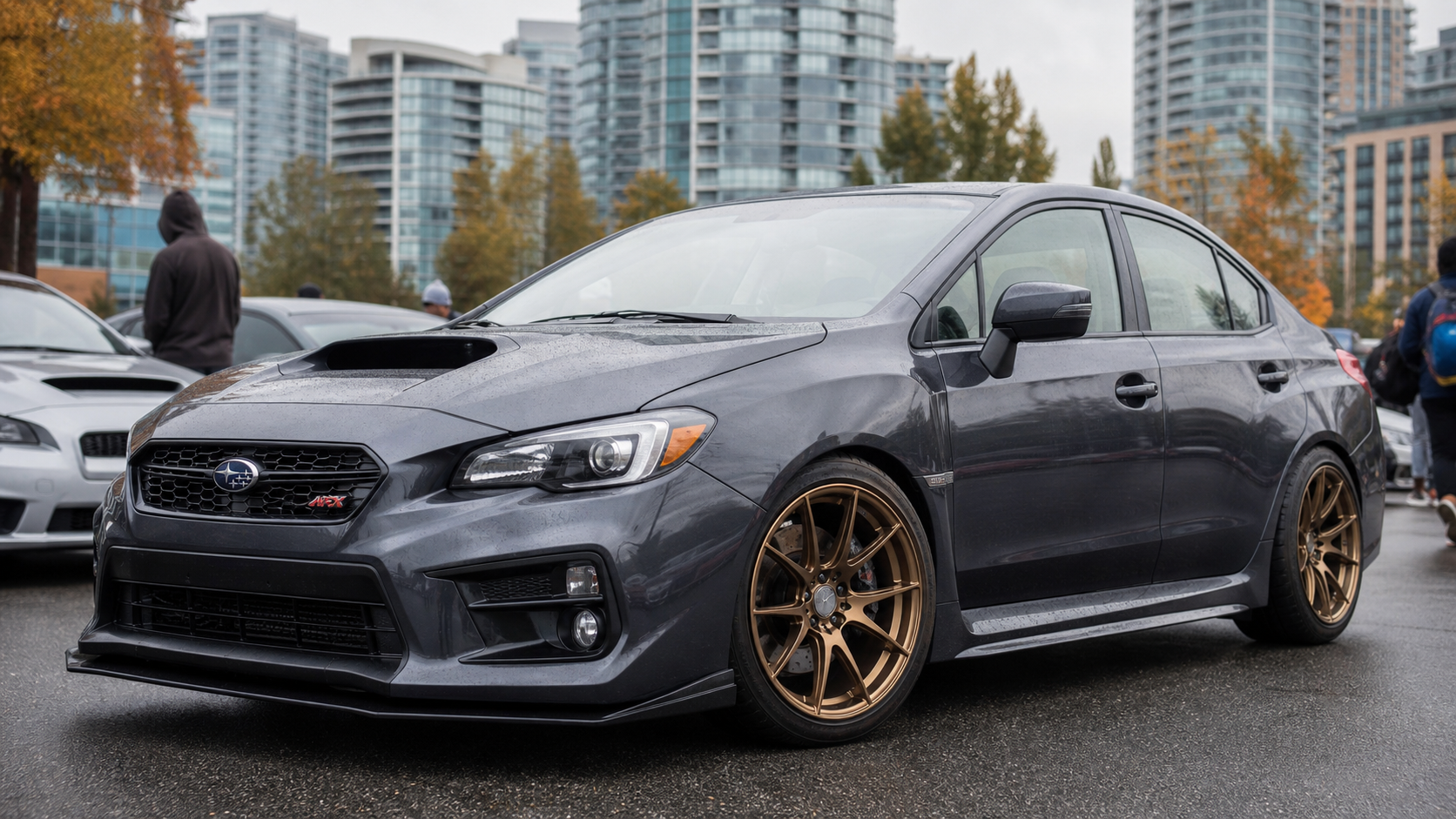
Quick fitment answer: Subaru WRX forged wheels are most useful in 18 inch fitments that improve steering response while keeping enough tire for Canadian roads.
The Subaru WRX is one of those cars where the wheel setup changes the whole personality of the build. A conservative wheel makes it look like a clean daily. A wider concave wheel with the right tire gives it that proper street and backroad stance without turning the car into something annoying to drive. For Canadian WRX owners, the challenge is choosing a setup that looks sharp in summer but still makes sense around rough roads, wet weather, cold mornings, and the occasional pothole that feels personal.
Most WRX owners land on 18 inch wheels because they fill the arches well, clear factory brakes on most trims, and support a wide range of performance tires. Forged wheels are a strong option for this platform because the WRX benefits from lower unsprung weight. A lighter wheel helps steering feel, suspension response, and braking, especially on a car that already has all-wheel-drive hardware adding weight.
This guide focuses on modern WRX fitment, including common 5×114.3 models. Always confirm the exact year, brake package, hub bore, and suspension setup before ordering wheels.
Why This Wheel Setup Works
The WRX rewards balance. It does not need an extreme wheel width or dramatic poke to look good. In fact, the best setups usually sit close to flush, keep enough tire to protect the wheel, and avoid rubbing under compression. That matters in Canada, where roads can be rough after winter and where a very low ride height can get old quickly.
A forged concave wheel works well because it gives the car a more performance-focused look without needing an oversized diameter. A good spoke design can show the brakes, create depth, and still clear calipers properly.
Best Wheel Size
For most WRX builds, 18 inch wheels are the safest and most popular upgrade. Some owners run 17 inch wheels for winter or rally-inspired setups, while 19 inch wheels can look premium but are less forgiving.
18 Inch Setup
An 18×8.5 wheel is the clean daily-driver choice. It pairs well with 245/40R18 tires and usually keeps the car easy to drive. For a more aggressive but still practical setup, 18×9.5 is very popular. A 255/35R18 or 255/40R18 tire can work depending on suspension height and clearance.
If the goal is a flush concave look, 18×9.5 +38 is a common reference point on many WRX builds. However, fitment depends heavily on tire brand, alignment, ride height, and whether the car is on factory suspension, lowering springs, or coilovers.
17 Inch Setup
A 17 inch setup is worth considering for winter or rough-road driving. A 17×8 or 17×8.5 wheel with a 235/45R17 or 245/45R17 tire gives more sidewall and better protection. It will not look as aggressive as an 18 inch concave wheel, but it can be the smarter choice for winter tires.
19 Inch Setup
Some WRX owners like 19 inch wheels for a sharper street look. The downside is tire cost and ride comfort. With less sidewall, pothole protection drops. Unless the car is mainly a fair-weather build, 18 inch wheels usually make more sense.
Offset and Fitment Guide
Offset is where many WRX builds go wrong. A wheel that is too aggressive may look great in a still photo but rub during real driving. For 18×8.5 wheels, offsets around +35 to +45 are common. For 18×9.5 wheels, +35 to +40 is a popular range, but it may require careful tire choice and alignment.
If the WRX is lowered, even a small difference in tire shoulder can matter. A square-shouldered 255 tire can rub where a rounder tire clears. Camber settings also affect fitment. A mild performance alignment can help the wheel sit correctly, but excessive camber just to fit a wheel is not ideal for a daily driver.
PCD and Hub Fitment
Many modern Subaru WRX models use a 5×114.3 bolt pattern. Older Subaru models may use 5×100, so do not assume fitment based only on the name WRX. Hub bore, lug nut seat, and brake clearance should also be checked.
If the car has upgraded brakes, spoke clearance becomes just as important as diameter. A wheel can be the right size and offset but still contact the caliper if the spoke profile is too flat.
Recommended Tire Sizes
For a WRX used on Canadian roads, these tire setups are practical:
- Daily 18 inch setup: 245/40R18 on 18×8.5
- Aggressive street setup: 255/35R18 on 18×9.5
- Comfort-focused 18 inch setup: 255/40R18 with careful clearance checks
- Winter setup: 235/45R17 or 245/45R17
- Track-day focused setup: 255/35R18 or 265/35R18 with supporting fitment work
For all-season use, a performance all-season tire can make sense in milder regions, but Canadian winters usually deserve a real winter tire. If the WRX runs a forged summer wheel, keeping a separate winter wheel package is the cleaner long-term plan.
Forged vs Cast Options
The WRX is sensitive to wheel weight. A heavy cast wheel can make the car feel slower to react, especially over rough pavement. A forged wheel can reduce unsprung weight while adding strength, which is useful for a performance daily.
That said, a forged wheel is not automatically better if the specs are wrong. A lightweight wheel with poor offset, weak brake clearance, or the wrong width will still create problems. The best forged WRX wheel is the one that fits properly and supports the tire you want to run.
Best Finish and Colors
Bronze wheels are a classic WRX choice, especially on WR Blue, white, black, grey, and silver cars. Gunmetal gives a more mature look and hides brake dust better. Satin black looks aggressive but can disappear visually on dark cars. Silver or machined finishes work well for a clean OEM-plus build.
In Canada, finish durability matters. Winter salt can damage cheap finishes quickly. If the wheels will see winter use, choose a finish that can handle road salt and clean them regularly.
Things to Avoid
Avoid choosing the widest wheel just because it looks aggressive. A WRX with rubbing tires, poor alignment, and heavy wheels is less enjoyable than a slightly narrower setup that drives cleanly. Avoid low-quality replica wheels if the car sees rough roads. A wheel failure is not worth the small savings.
Also avoid running summer tires too late into cold weather. Even the best wheel setup cannot fix a tire compound being used outside its temperature range.
Final Recommendation
For most Subaru WRX owners in Canada, the best forged concave wheel setup is 18×8.5 or 18×9.5 with a practical offset and a tire that suits local roads. A clean daily build can run 18×8.5 with 245/40R18 tires. A more aggressive enthusiast setup can run 18×9.5 with 255 width tires, but suspension height and alignment need to be planned.
If the car is driven year-round, use separate winter wheels. Keep the forged concave setup for summer performance tires, and the WRX will feel sharper, look better, and stay more reliable through Canadian seasons.
FAQ
What is the best wheel size for a Subaru WRX?
For most WRX builds, 18 inch wheels are the best balance of appearance, tire choice, brake clearance, and ride quality.
What offset is best for Subaru WRX forged wheels?
For 18×8.5 wheels, +35 to +45 is common. For 18×9.5 wheels, +35 to +40 is popular, but tire width and suspension height must be checked.
Can I run 18×9.5 wheels on a WRX?
Yes, many WRX owners run 18×9.5 wheels, often with 255 tires. Fitment depends on model year, tire brand, ride height, and alignment.
What bolt pattern does the Subaru WRX use?
Many modern WRX models use 5×114.3, while some older Subaru models use 5×100. Always verify the exact year.
Are forged wheels worth it on a WRX?
Forged wheels can be worth it because lower unsprung weight improves steering feel, suspension response, and braking performance.
Related Fitment Guides
- BMW G80 M3 Forged Concave Wheels: Best 19/20 Fitment and Offset Guide
- Best Off-Road Wheels for Ford F-150: Size, Offset, and Tire Fitment Guide
- Nissan Patrol Y62 Deep Dish Wheels: Best Size, Offset, and Tire Fitment Guide
- Toyota Land Cruiser 300 Wheels: Best Sizes, Offset, and Tire Setup for Australia