
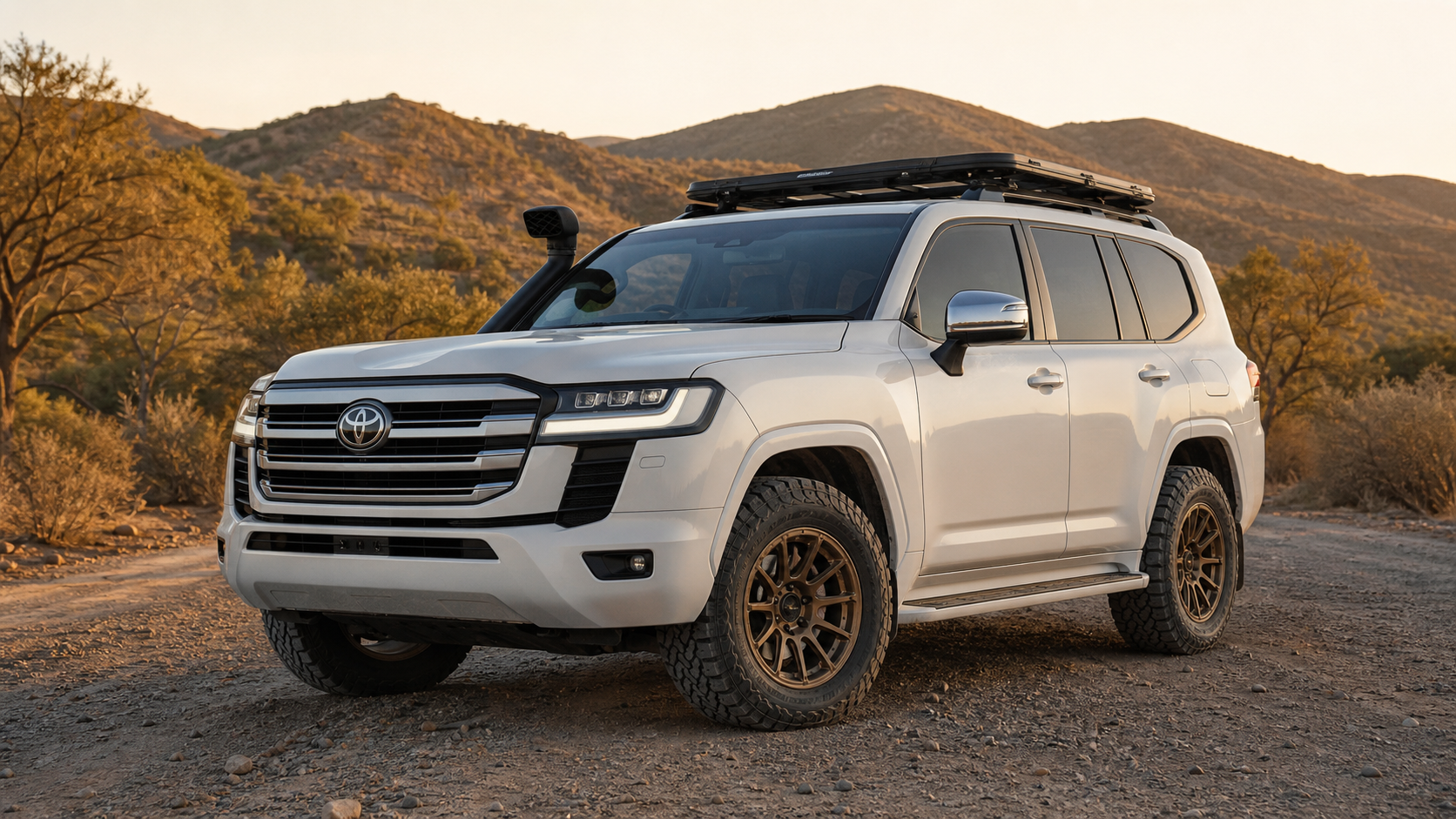
Quick fitment answer: Land Cruiser 300 wheels should prioritize load rating, tire sidewall, and touring comfort before aggressive stance, especially for Australian 4×4 use.
The Toyota Land Cruiser 300 is built for the kind of driving where wheel choice actually matters. In Australia, an LC300 might spend one week commuting through town and the next week carrying family, camping gear, water tanks, drawers, a fridge, and recovery equipment across corrugations or sandy tracks. That is a very different use case from a show-only SUV. The wheel needs to look right, but it also needs to carry weight, clear brakes, suit common all-terrain tires, and survive long-distance touring.
Most LC300 owners looking for a practical upgrade end up choosing 18 inch wheels. A 20 inch setup can look clean on road-focused builds, especially on Sahara, GR Sport, or ZX-style trims, but 18 inch wheels offer a better sidewall for touring and off-road comfort. Forged wheels are also worth considering on this platform because the LC300 is heavy, powerful, and often modified with accessories that add more weight.
This guide is written for Australian touring, 4×4, and clean street-overland builds. Fitment can vary by trim, brake package, suspension lift, and tire brand, so always measure and confirm local road rules before ordering.
Why This Wheel Setup Works
The LC300 has the torque, size, and presence to carry a strong wheel design, but the best setups avoid going too wide or too low-profile. Australia rewards practical sidewall. Corrugated roads, gravel, sand, and potholes are easier on a tire with more air volume. That is why 18 inch off-road wheels have become the default for many touring builds.
A good LC300 setup also respects load rating. Once you add a bull bar, winch, long-range tank, roof platform, and rear storage, wheel strength becomes more than a brochure number. The right forged or heavy-duty alloy wheel helps keep the vehicle predictable when loaded.
Best Wheel Size
The two most common aftermarket choices are 18×9 and 20×9. Both can work, but they suit different drivers.
18 Inch Setup
For a real Australian touring build, 18×9 is the most sensible wheel size. It gives enough width for popular all-terrain tires without creating a stretched look. It also keeps enough sidewall for airing down on sand or rocky tracks.
A typical 18 inch setup may use 275/70R18, 285/65R18, or 285/70R18 tires depending on suspension, offset, and clearance. The 285/70R18 size gives a strong stance and extra diameter, but it may require careful offset choice and minor clearance checks. A milder 275/70R18 is easier to live with and still improves the touring look.
20 Inch Setup
A 20 inch wheel suits an LC300 that spends more time on sealed roads but still wants a premium 4×4 stance. A 20×9 wheel with an all-terrain tire can look excellent, especially in satin black, gunmetal, or bronze. Tire options such as 275/55R20 or 285/55R20 are common choices.
The trade-off is sidewall. On rough tracks, a 20 inch tire has less cushion and may be more vulnerable to damage. It can still work for light off-road and highway touring, but it is not the first choice for remote-area travel.
Offset and Fitment Guide
Offset is one of the biggest decisions on an LC300. Too much positive offset can keep the tire tucked too close to suspension components. Too much negative offset can create poke, throw dirt down the side of the vehicle, and create issues with legal coverage.
For many LC300 builds, offsets around +20 to +35 are a practical starting point. A slightly more aggressive setup can move closer to +10 or +15, but the final choice depends on tire width, lift height, and whether the owner wants a factory-plus look or a wider track.
Australian owners should also consider state regulations around track width and tire coverage. A setup that looks great in photos may not pass inspection or may attract attention if the tire sits outside the guard.
PCD and Hub Fitment
The Land Cruiser 300 commonly uses a 6×139.7 bolt pattern, which is shared with many Toyota 4×4 platforms. However, that does not mean every 6×139.7 wheel is right for the LC300. Hub bore, brake clearance, load rating, nut seat, and center cap design all matter.
Because the LC300 can be used heavily loaded, choose wheels designed for SUV and 4×4 applications, not light-duty passenger styling wheels. If using hub-centric rings, make sure they are correctly sized and suitable for the environment.
Recommended Tire Sizes
For a balanced LC300 touring setup, consider these sizes:
- Easy touring fitment: 275/70R18
- Strong all-rounder: 285/65R18
- Aggressive touring fitment: 285/70R18
- Road-biased 20 inch setup: 275/55R20
- Premium 20 inch all-terrain setup: 285/55R20
All-terrain tires are usually the best match for the LC300. They handle highway kilometres, gravel, wet roads, and sand better than a mud-terrain for most owners. Mud-terrain tires make sense for regular mud, ruts, and difficult tracks, but they bring extra noise and weight.
Forged vs Cast Options
Cast wheels are common because they are affordable and available in many designs. For an LC300 used mainly in town, a high-quality cast wheel with the right load rating can be acceptable. For touring, forged wheels have a strong argument. They can reduce unsprung weight while improving strength, which is valuable on a heavy 4×4.
Forged wheels also suit owners who care about brake clearance and precise fitment. A well-designed forged wheel can offer strong spoke clearance without unnecessary weight. That matters when the vehicle is already carrying accessories.
Best Finish and Colors
Bronze wheels suit white, black, grey, silver, and sandy beige LC300 colors. Satin black is rugged and easy to match with bull bars, roof racks, and black trim. Gunmetal is the clean middle ground for owners who want a premium look without going too bright.
For Australian use, finish durability matters. Red dust, salt air, and long-distance gravel can punish cheap finishes. A quality powder coat or durable painted finish is worth paying for.
Things to Avoid
Avoid oversized wheels with thin tires if the LC300 will be used for touring. The vehicle may look sharper in town, but the setup can be less comfortable and more vulnerable off-road. Avoid very aggressive negative offsets unless the vehicle has proper guard coverage and the owner understands the legal and mechanical trade-offs.
Also avoid ignoring total vehicle weight. If the LC300 is fully kitted for touring, the wheel and tire package should be chosen with load capacity in mind. A good wheel setup is part of the vehicle’s reliability plan, not just its look.
Final Recommendation
For most Australian Toyota Land Cruiser 300 owners, an 18×9 wheel with a moderate positive offset and a 275/70R18 or 285/65R18 all-terrain tire is the most balanced setup. It looks tougher than stock, keeps good sidewall, supports touring use, and avoids many of the headaches that come with oversized show-style wheels.
If the vehicle is mostly road-driven, a 20×9 setup with 275/55R20 tires can look refined while still offering light off-road capability. For serious touring, stick with 18 inch wheels, choose a proper load rating, and keep the fitment practical.
FAQ
What is the best wheel size for a Toyota Land Cruiser 300?
For Australian touring, 18×9 is usually the best wheel size because it offers strong tire sidewall, good load support, and practical tire availability.
What offset works best on the LC300?
Offsets around +20 to +35 are a practical starting point for many LC300 builds. More aggressive offsets can work, but legal coverage and rubbing should be checked.
Can I run 285/70R18 tires on a Land Cruiser 300?
Many LC300 builds can run 285/70R18 tires with the right wheel offset and suspension setup, but clearance should be checked carefully.
What bolt pattern does the Land Cruiser 300 use?
The LC300 commonly uses a 6×139.7 bolt pattern. Always confirm hub bore, brake clearance, and load rating before ordering.
Are forged wheels worth it for the LC300?
Forged wheels are worth considering for touring, towing, and heavily accessorized LC300 builds because they can offer strong load performance with lower weight.